Direct deposit authorization or a voided check: what payroll actually wants
The onboarding paperwork asks for a direct deposit form, and somewhere in the instructions is a line about attaching a voided check. One of those is the actual authorization. The other exists purely to catch a mistake in the first one.
This guide covers what each document does, why some employers ask for both, what to send if you genuinely do not have paper checks, and the handful of mistakes that quietly delay a first paycheck.
What the direct deposit form actually records
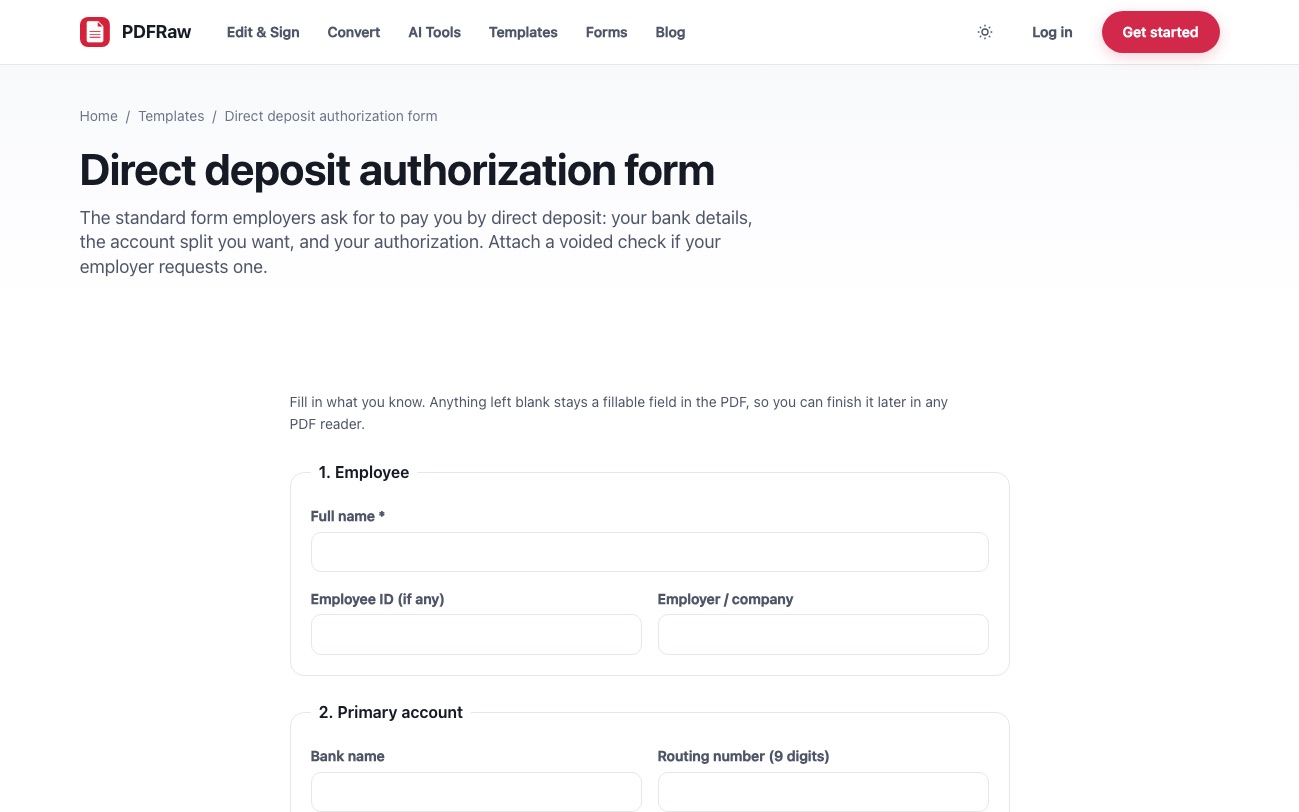
A direct deposit authorization form has three parts: your details and your employer's, your bank name with a routing number and account number typed in, checking or savings marked, and an authorization statement you sign giving your employer permission to deposit your pay there and to reverse a deposit made in error. Everything on it is exactly what you type. The form itself does not verify anything against your bank.
That last point is the whole reason a second document sometimes gets asked for. A single transposed digit in a nine digit routing number, or an account number copied from the wrong line of a statement, produces a form that looks complete and pays nobody.
Why some employers still ask for a voided check
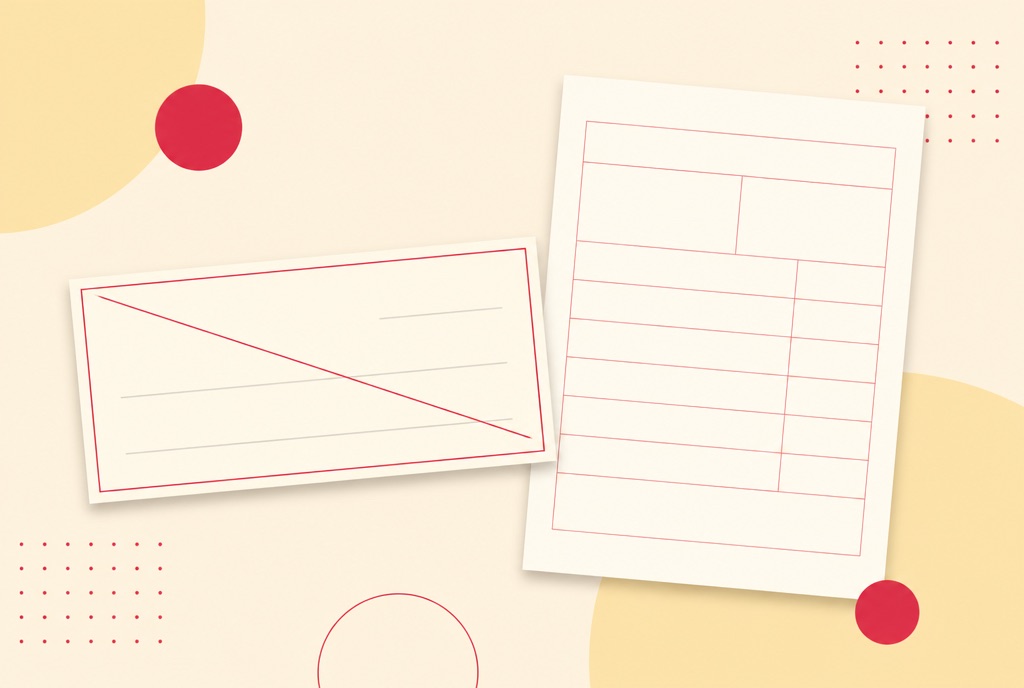
A voided check is an ordinary check from your account with "VOID" written across the front, so it cannot be cashed. What makes it useful is the strip of numbers printed along the bottom in magnetic ink: your bank's routing number, your account number, and the check number, encoded by the printer at the same time the check itself was printed. Those numbers did not come from anyone typing them into a form, so there is nothing to transpose.
Payroll systems that ask for both are not being redundant for no reason: the form is what gets keyed into the payroll system, and the check is what confirms the numbers keyed in match the numbers actually printed on your account.
What to send if you do not have paper checks
- A direct deposit form your own bank issues. Most banks generate one from their app or website with your routing and account number pre filled, which is at least as reliable as a voided check.
- A bank letter or account statement showing your name, the routing number and the account number, with anything else on the page genuinely covered before you send it anywhere, not just crossed out by hand.
- A starter check, the small unnumbered checks some banks provide at account opening, which carries the same magnetic ink line as a full check.
- A screenshot from your banking app of the account and routing numbers, if your employer explicitly says it is acceptable. Not every payroll department will take this, so ask first rather than assuming.
A deposit slip is the one substitute to avoid. Some banks print a different internal routing or account number on deposit slips than on checks drawn against the same account, specifically because a deposit slip is meant to route deposits, not payments, through the bank's own systems.
The mistakes that quietly delay a paycheck
- Swapping the routing and account numbers. They sit next to each other on a check and both are just digits; read the small print above each one rather than guessing by position.
- Checking or savings marked wrong. Payroll systems route to the account type you specify, not the one attached to the routing number you gave, so ticking the wrong box does not fail loudly, it just deposits into the wrong account.
- An account closed after switching banks that never got updated on file. The old form stays on record until a new one replaces it; switching banks is the single most common reason a direct deposit silently bounces months after it was set up correctly.
- Rounding a percentage split so two accounts add up to more than 100 percent, which most payroll systems reject rather than deposit incorrectly.
Splitting your paycheck across two accounts
The direct deposit form has a second account section precisely for this: send a fixed amount, a percentage, or the word "remainder" to each account. "Remainder" on the second account, paired with a fixed dollar amount on the first, is the common pattern for automatically moving a set amount into savings before the rest hits checking.
A change to the split takes effect on the next pay cycle at the earliest, sometimes the one after, because payroll systems process deposit instructions on their own schedule rather than the moment the form is submitted.
Filling it in and getting it in front of payroll
Fill in the direct deposit authorization in the browser, download the PDF, and sign it. Unlike a power of attorney or a vehicle title transfer, this is an internal HR document with no notary or witness requirement behind it anywhere, so a typed name is the normal way it gets signed and returned.
It usually arrives alongside the rest of new hire paperwork, most commonly a Form W-4 for tax withholding and a Form I-9 for work eligibility if you are an employee rather than a contractor; W-9 vs W-4 vs W-8BEN sorts out which of those you are actually filling in. A timesheet and an expense report template are usually not far behind on the first day either.
Frequently asked questions
Do I have to attach a voided check to a direct deposit form?
Only if your employer asks for one. Some payroll systems require it as independent proof of your routing and account numbers; others rely on the form alone. Check the instructions you were given rather than assuming.
What if I do not have any paper checks?
Ask your bank for a direct deposit form through its app or website, which most banks generate with your account details pre filled, or provide a bank letter or statement showing the same numbers with everything else redacted.
Where do I find my routing number?
It is the first group of nine digits printed along the bottom of a check, and almost every bank also lists it in its app or online banking under account details. Do not use the number on a deposit slip, which can differ from the one on a check.
Can I split my paycheck between two banks?
Yes. The direct deposit form has a second account section for exactly this, letting you send a fixed amount, a percentage, or the remainder of your pay to a second account at a different bank.
What happens if I get a digit wrong in the account number?
Payments to a wrong but valid account are usually returned by the receiving bank within a few business days and re-deposited once payroll corrects the form, delaying that paycheck. Double check both numbers against your check or bank app before submitting.
How long does a new direct deposit take to start?
Typically one to two full pay cycles. Many employers issue a paper check or hold the first payment while the new account details are verified, so do not expect the very next payday to move electronically.